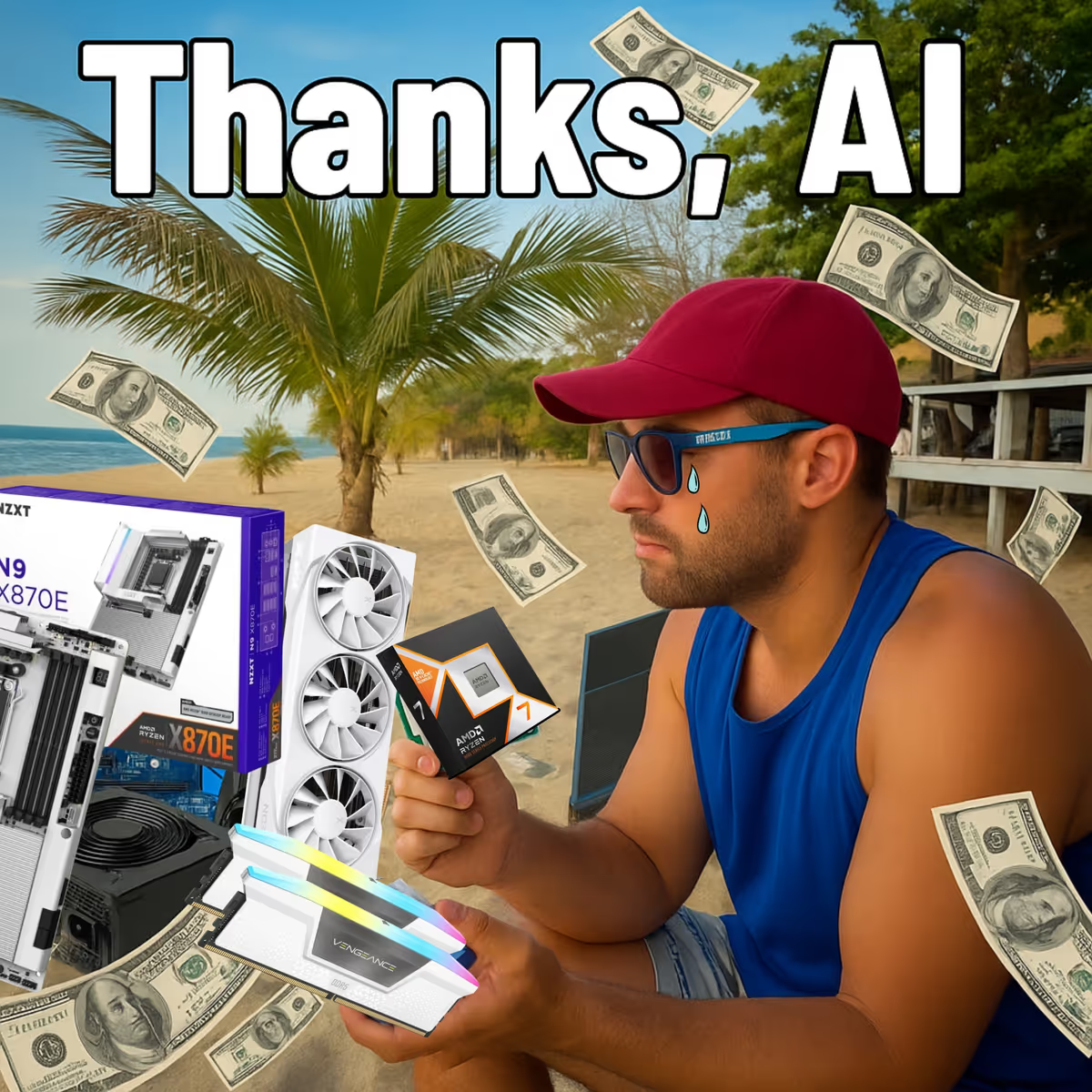
Building a gaming PC isn’t cheap. AI demand is driving up PC part prices, from GPUs to RAM, and that's why future-proofing now comes at a serious cost.
There’s a special kind of optimism that comes with building a gaming PC. It’s the belief that this time, after years of upgrades, bottlenecks, and surprise expenses, you’re finally building something that will last. Something future-proof. Something powerful enough that you won’t have to think about upgrading again for a long while.
That optimism usually lasts right up until you start looking at prices.
This build started with good intentions. I wanted a machine that could handle modern games effortlessly, stay relevant for years, and double as a high-end workstation. I wanted performance, stability, and just a little bit of flex. What I didn’t expect was to feel personally attacked by the cost of memory, GPUs, and the slow realization that AI is no longer just threatening jobs, it’s coming for our RAM, storage, and probably our relationships next.
Welcome to PC building at the end of 2025 and the beginning of 2026.
At the heart of this build is AMD’s Ryzen 7 9800X3D, a processor that feels like it was designed specifically for people who are tired of hearing the word “bottleneck.” With eight cores, sixteen threads, and AMD’s 3D V-Cache doing its magic, this CPU absolutely dominates gaming workloads while staying impressively efficient. It’s the kind of processor you buy because you don’t want to think about CPUs again for a long time. And honestly, that peace of mind alone is worth it.
 From the Author
Of course, no gaming PC conversation lasts long before we talk about the GPU, the most dramatic, overpriced, emotionally exhausting component in any build. The RX 9070 XT is a beast. RDNA 4, 16GB of VRAM, strong performance across the board, and a clean white triple-fan design that fits the aesthetic perfectly. It’s powerful, it’s future-ready, and it’s exactly what I wanted.
At this point, MSRP feels like a suggestion written in pencil. Between AI data centers, insane demand, and companies prioritizing enterprise over consumers, GPUs have quietly turned into luxury items. You don’t casually buy one anymore. You mentally negotiate with yourself, justify the purchase six different ways, and then pretend you got a “deal” because it wasn’t as bad as it could have been.
The irony is that this build is supposed to be about gaming, but it’s impossible to ignore how much AI has reshaped the entire hardware market. We joke about AI taking jobs, and that concern is very real, but now it’s also taking memory, storage, GPUs, and anything else it can shove into a server rack. Somewhere out there, massive data centers are hoarding RAM while gamers stare at price charts wondering how things doubled in six months.
Speaking of RAM, let’s talk about it, because this is where the pain really kicks in.
Six months ago, memory prices were reasonable. Not cheap, but reasonable. Fast-forward to now, and suddenly RAM costs enough to make you question your life choices. AI workloads have created massive demand for high-capacity, high-speed memory, and consumers are feeling it hard. I just wanted enough RAM to comfortably game, multitask, and future-proof my setup. Instead, I found myself staring at prices thinking, “So this is what it feels like to compete with machine learning models.”
AI isn’t just taking jobs anymore. It’s taking our RAM. And at this rate, it’s only a matter of time before it starts asking why we even need personal computers at all.
 From the Author
To support everything, I went with NZXT’s N9 X870E motherboard, a board that feels less like a PC component and more like a technological statement. It supports PCIe 5.0, Wi-Fi 7, USB4, multiple M.2 drives, and has more bandwidth than most people will ever fully use. Is it overkill? Absolutely. But future-proofing often is. This board is about buying into a platform that won’t feel outdated the moment the next generation of hardware arrives.
 From the Author
Powering all of this is Corsair’s RM1000x Shift, a power supply that’s quietly one of the smartest purchases in the build. GPUs are becoming power-hungry monsters, and the last thing I want is to worry about wattage headroom in the future. With ATX 3.1 and PCIe 5.1 support, this PSU is ready for whatever nonsense hardware manufacturers dream up next.
 From the Author
Storage, at least, felt like a small win. The WD_BLACK SN850X 2TB NVMe SSD is blazing fast, reliable, and somehow feels reasonably priced compared to everything else. When your SSD feels like the most financially responsible component in your build, you know the market is wild.
 From the Author
Cooling the whole system is NZXT’s Kraken Elite 420, which might honestly cool better than my apartment. Massive radiator, quiet fans, and a customizable LCD screen that serves no practical purpose other than reminding me that yes, I spent money on this, and I’m enjoying it. The CPU will never thermal throttle, and I’ll never again worry about temperatures under load.
 From the Author
All of it lives inside the NZXT H9 Flow RGB+, a case that feels like it was designed to show off your build and your questionable financial decisions. It’s spacious, airflow-focused, and clean enough that cable management doesn’t feel like a punishment. With seven RGB fans and a dual-chamber layout, it turns the PC into something you actually want on your desk, not hidden under it.
 From the Author
So is this build future-proof? Yes, technically. Practically. Emotionally? That depends on how future-proof your wallet is.
Building a gaming PC means accepting a few hard truths. AI isn’t going away. Hardware prices aren’t magically dropping. Companies are prioritizing enterprise workloads, and gamers are left adapting. Future-proofing now means paying more upfront so you can think less later.
And yet, despite all of it, I’d do it again.
Because when everything finally comes together, when the system boots instantly, games run flawlessly, and the RGB lights up just right—it reminds you why we do this in the first place. We build because we love the tech. We build because we want control over our systems. And sometimes, we build just to prove we still can.
Now if you’ll excuse me, I need to stop checking RAM prices before AI decides it also needs my keyboard, my mouse, and my significant other.
Welcome to BetterAtCoding.